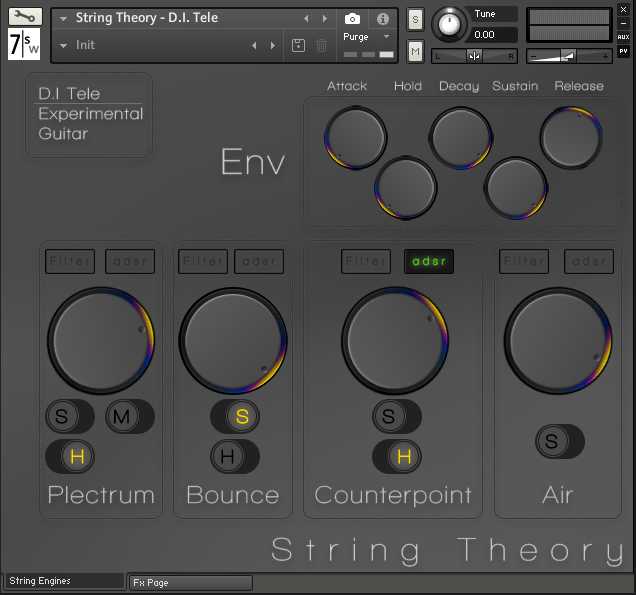
D.i. Telecaster KONTAKT
P2P | 04.01.2019 | 85 MB
String Theory is a series of Kontakt instruments based on guitar samples.
Viewed 7256 By Music Producers & DJ´s.
Tags:


String Theory is a series of Kontakt instruments based on guitar samples.
Smoky electric guitar and bass riffs, jazzy keys, skippy beats and warm vinyl crackle – welcome to the epic Hip Hop groove station that is String Theory – Hip Hop Guitars & Beats! Featuring well over 300 Samples spanning expert, grooving live electric guitar and bass playing, smooth electric piano leads, vintage drum machine loops, soulful synth pads, sweet shaker patterns, bouncing synth parts and beyond, we’ve burnt the midnight oil to bring you this royalty-free collection of vintage, analog vibe and future Hip Hop rhythm.
When I first started producing using FL Studio, I winged it. I knew absolutely NOTHING about music but I knew how to get what was in my head into a beat. I knew guys who took band classes and went to special music schools but at the time, I didn’t like learning the traditional style of music. It bored me to tears. So, I thought all music was boring, until I found an easy to follow system which taught me music theory in a day. Today, I want to give you some of the most valuable information you can find if you want to learn music theory. I have crafted quick videos below to show you some cool techniques to get your started. Music theory is more than just chords, it involves progressions, scales and other aspects which will help you make great melodies and songs.
Today, more and more people are wanting to learn music. Young children are learning to play the piano, guitar, violin, trumpet, and many more instruments. Music is very unlike any other activity. It is what lets you express every feeling with a simple change in volume or pitch, and captivate an audience after a single key press. This is, if you know what you’re doing. In this course we will cover all of the fundamentals of music as per the ABRSM syllabus for Grades 1 and 2. In ~3 hours you could be covering the same content as usually is covered in a year of music lessons!
Learn music theory while developing the skills to hear and apply the concepts. Don’t just cover music theory – learn to hear concepts! Practice modules of increasing skill development follow each section. Learn the basic elements of the musical score by completing assignments with free music scoring software! Take steps toward becoming a fully formed musician with three courses in one. Welcome to The Elements of Music. Drawing from and expanding on our top-selling music course, these lessons are designed to develop a deep understanding of music theory and apply this knowledge through carefully created ear training modules, skills building units, and lessons in music theory.
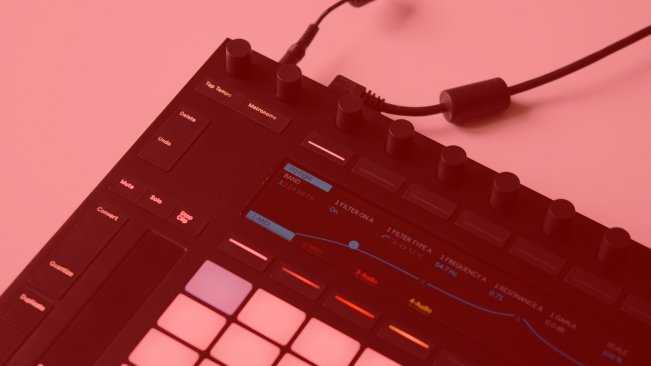
Since this curriculum is intended to help electronic musicians who use Ableton and Push 2, most of the demonstrations and walkthroughs are presented directly in Ableton and/or on Push 2. This means that learning music theory like major or minor scales and chords is different. In this short course, you’ll learn the concepts in a way that makes more sense with Ableton and Push 2. There are definitely useful aspects of traditional music theory which is why *some* lessons ALSO demonstrate triads, intervals and scales on a traditional keyboard (Novation LaunchKey 49), so you’ll see how music theory is based on piano. Scales, triads and intervals are the alphabet of the musical language and its hard to do much without them. You’ll find this course is packed with condensed lessons that explain everything you need to know about building and playing scales and chords on Ableton and Push 2.
Developing confidence with music theory (and using it in your electronic music) starts with a firm grasp of the fundamentals. You’ll quickly learn about pitch, sharps and flats, the chromatic scale, accidentals, intervals and more. If you don’t know what those are, you’re making electronic music harder than it needs to be. Every time you want to learn something in music theory, you’ll encounter these terms and concepts. If you’re not comfortable with these terms and concepts then you’ll be at a disadvantage in learning quickly. Learning music theory is fun! But, not if it doesn’t make sense. Do yourself a favor and sit down with this quick course and familiarize yourself with these terms and concepts. You’ll be glad you did! Music theory is a wide, wonderful world and you’ll need to know the language if you want to succeed.