

🎵 MaGeSY® R-EVOLUTiON™⭐⭐⭐

  • Spring Pack WAV EXS24 NI BATTERY
    May 15th, 2014 ⚡
    Categories:

    image

    Spring Pack WAV EXS24 NI BATTERY

    SYNTHiC4TE | May 15 2014 | 266 MB

    The Spring Pack is entirely based on field recordings made on the first warm spring day we had of 2011 in upstate New York. Included are numerous sounds found in nature, as well as a number of processed sounds built out of the field recordings. The processed samples were achieved using a number of sound design programs such as CSound, Reaktor, Metasynth and others. Total File Size: 395 MB Includes: 590 24 bit 44.1kHz Wav Files


    Viewed 9554 By Music Producers & DJ´s.


  • Guitar Techniques – Spring 2014
    March 23rd, 2014 ⚡
    Categories:

    image

    Guitar Techniques – Spring 2014

    English | 100 Pages | True PDF | 20 MB

    Include Audios

    Guitar Techniques is music magazine especially for Guitars, from choosing right model guitar to tuning , for noobs to pro everything is covered and explained in simple manner. hot lessons too.


    Viewed 8192 By Music Producers & DJ´s.


  • image

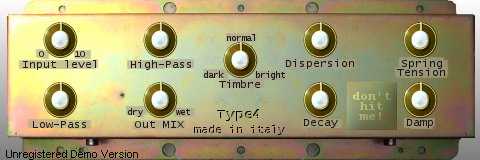
    Spring Reverb Type4 v1.0.1 AU VST UB WiN MAC

    VST AU PC & MAC OSX UB REPACK-DYNAMiCS

    Team DYNAMiCS & AiR & NEMESiS | 01-26-2009 | 6 MB

    A spring reverb is a system to obtain artificial reverberation invented during the 40’s by Laurens Hammond (also inventor of the Hammond Organ). In a Spring Reverb pan, the audio signal is coupled to one end of the spring by a transducer (a device that can convert electrical energy into mechanical energy or viceversa). This creates waves that propagate through the spring in both directions. At the other end of the spring there is another transducer that converts the motion in the spring into an electrical signal, which is then amplified and added to the dry sound. Most spring reverb units use several springs together, with each spring having its own characteristics (length, dimensions, tension, etc.) resulting in a natural reverberation by summing several delayed sounds at fixed or random intervals. However, with real spring reverbs the user isn’t allowed to change these characteristics. A software simulation like Type4, on the other hand, allows you to adjust parameters like “decay” (reverb duration), the dampening factor, the virtual spring tension and other parameters that affect the overall timbre of the reverb effect. Why should you want to use a spring reverb rather than a precise and modern digital reverb? Spring reverbs have typical sonic characteristics that, nowadays, make them desirable mostly as effects on their own rather than simulations of an acoustic phenomena.


    Viewed 14324 By Music Producers & DJ´s.

    Tags:

Prev 1 2 3

MaGeSY TeleGram Subscribe & Stay up to date with all the Posts that are published in MaGeSY MaGeSY Podcast: Subscribe & Stay up to date with all the Audio Posts that are published in MaGeSY MaGeSY Instagram Official MaGeSY-Youtube Official MaGeSY-X Official MaGeSY-Facebook Official MaGeSY-Pinterest Official MaGeSY-WhatsApp Channel Official

With Adblocker the page loads slower & avoid enhanced new search


ಮ್ಯಾಜೆಸ್ಯ್