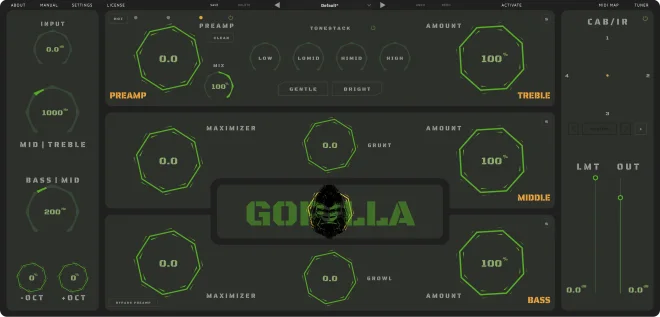
Gorilla v1.2.0 WiN
Team BUBBiX | 16 January 2024 | 9.7MB
Different monsters for different genres: the Gorilla plugin includes 3 preamps and the simulation of 3 studio standard bass amps.
Viewed 11689 By Music Producers & DJ´s.


Different monsters for different genres: the Gorilla plugin includes 3 preamps and the simulation of 3 studio standard bass amps.

New reference in the simulation of spring reverbs. Based on a mixed convolution and algorithmic technology, SpringAge can give the advantages of the two worlds. If you have never been able to get the real tone and dynamic of a spring reverb out of a plugin, then you need to check it out. With three spring models, taken from the most standard and acclaimed vintage and modern gears, SpringAge always gives you the perfect tone on any kind of instrument, ranging from guitars to vocals, keyboards and synthesizer. Your recordings will have that vintage and dynamic reverb tone, that you cannot get from a digital reverberation unit.
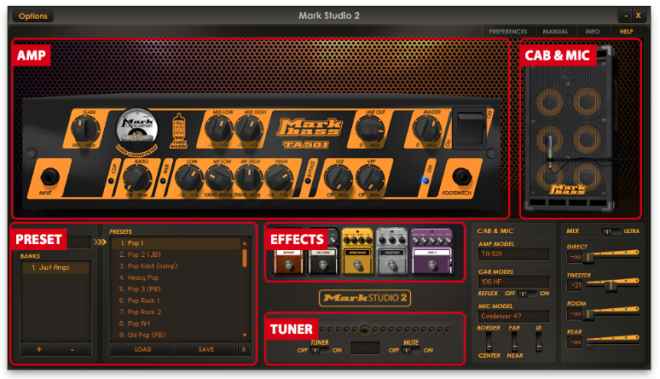
Mark Studio 2 is an emulation of the best Markbass amplifiers and cabinets, which includes: • 6 Markbass heads • 9 Markbass cabinets • and a rich pedalboard to complete your rig and unleash your creativity.
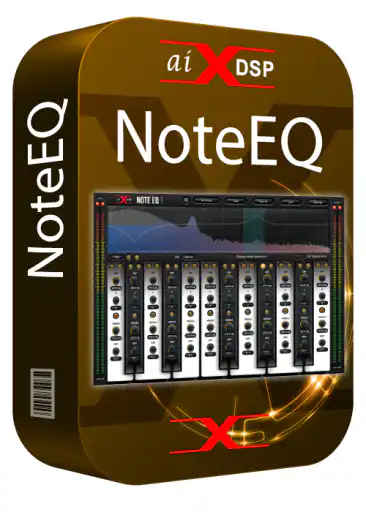
More than a decade ago, I made a version of this in WDL (thanks Rob!) to deal with the problem of “one note bass” and dealing with overly loud or overly dead bass notes across the bass fret-board. My mastering engineer ended up using it for far more things, and I have been meaning to update it ever since. In this version, you actually have a limiter per band. In earlier versions, just EQ-ing a hole sometimes caused more problems than it fixed, but now, with the limiter, you can get a hold of the mix when its making trouble and leave it alone when it isn’t! Click “E” (for Enable, were still deciding on the name) in order to enable a band (they are off by default) and “D” in an enabled band to turn on the limiter. Switch octaves with the +/- buttons under the spectrum. Note that the octaves are shown in the spectrum display so you don’t have to do the math.
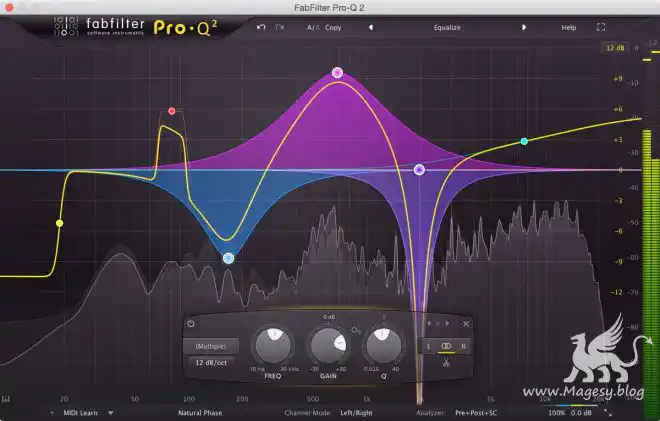
FFT has announced availability of FFT Pro-Q 2, a major update to the Pro-Q equalizer plug-in. New features such as Full Screen mode, unique Natural Phase processing, Auto Gain, Spectrum Grab, Gain-Q interaction and slope support for all filter types make Pro-Q 2 better than its predecessor in every way, while staying true to the original vision of combining high sound quality with unsurpassed interface workflow.
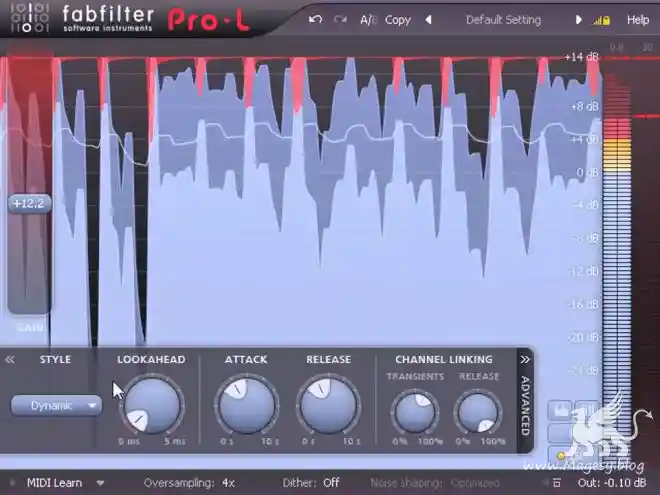
FFT Pro-L offers four advanced limiting algorithms, all with their own distinct character. Some are designed to be as transparent as possible, while others may add a nice punch or flavor to your music. Together with the adjustable look-ahead, attack, release and unique separate channel link settings for both transients and release, the limiter can be fine-tuned to achieve both maximum loudness and the highest possible transparency at the same time. With its informative real-time display and meters, the clutter-free interface makes working with FFT Pro-L a breeze. Different meter scales, including the three K-System scales (K-12, K-14 and K-20), will help you to get precise control over your levels. Of course, you can easily disable all metering if you want to judge the sound by ear only.
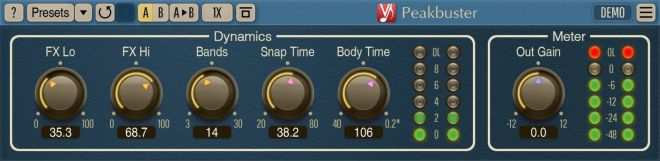
Peakbuster is an attack-phase boosting and harmonic enhancement AU, AAX, and VST plugin for professional music and sound production applications. Peakbuster is a multi-band transient enhancer effect plug-in that uses an advanced automatic algorithm. Peakbuster stands out from the competition in its ability to always sound natural, even on a full-spectrum master bus. The strength of the effect depends on the material being processed: the algorithm masterfully analyses dynamics of the sound it processes, and applies boosting in quantities that are “exactly right”. Moreover, the algorithm has a suitably “fast” reaction time making its adjustments sound “fluid”, not “over the place”.